
Introduction
What are cannabis terpenes? They are the first thing you notice before you even decide what to do with a product.
The seal breaks. Your nose catches everything at once, sharp citrus, damp earth, or that warm peppery hit nobody warned you about. Your brain has not caught up yet. Your nose already knew. That whole split-second reaction? Terpenes.
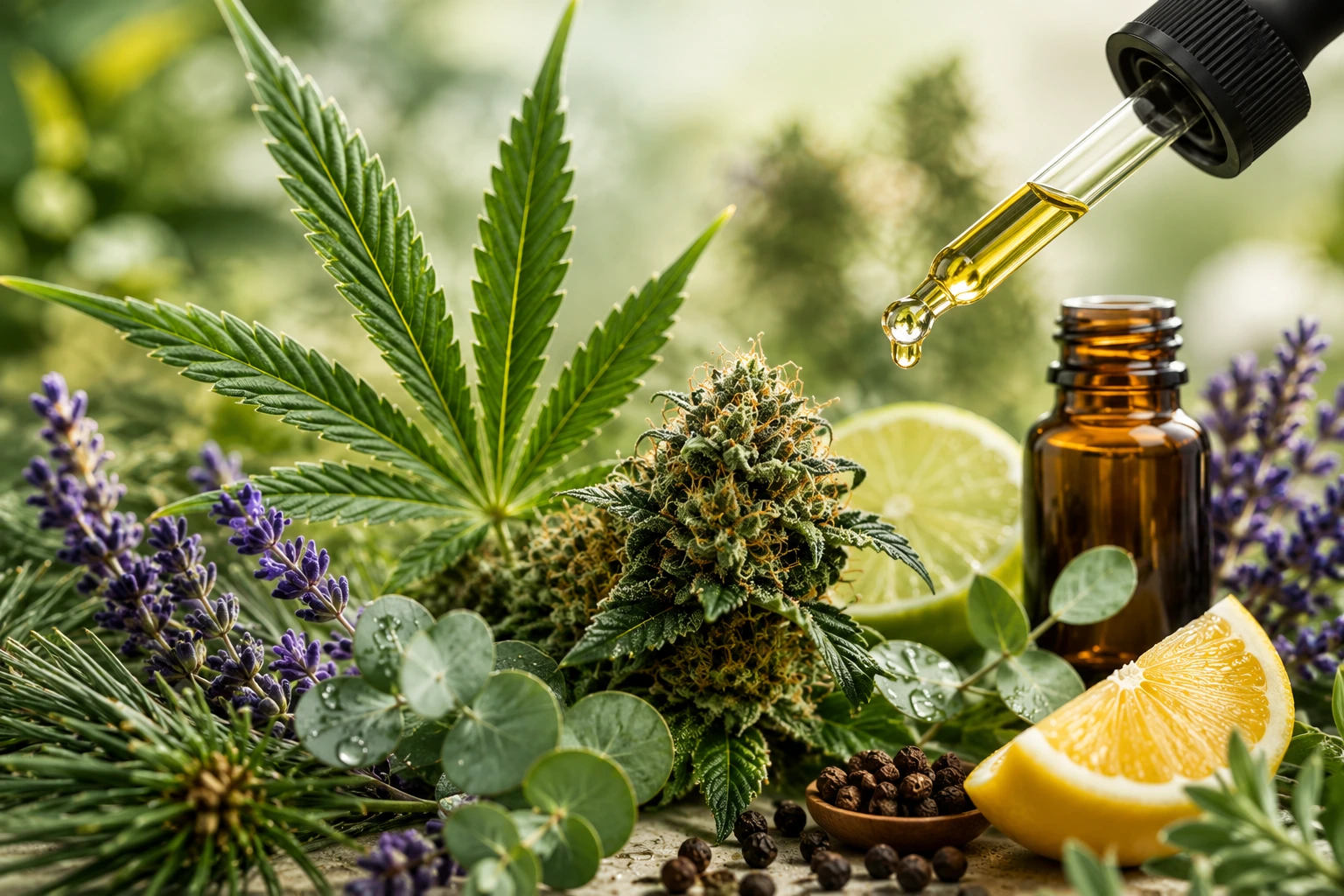
And they are everywhere, not just cannabis. You brush past them on a hiking trail when the pine trees hit you. You get them when you scratch a lemon peel while making dinner. You feel them slow you down slightly when you walk past lavender at a weekend market. Same compounds, completely different plants. Cannabis sits on the wider end of the variety spectrum though, and that is a big reason why strains can smell so unlike each other.
The part people tend to overlook is that terpenes go well past scent. They get in there with cannabinoids and genuinely change how a strain feels. Two products with identical THC numbers can land very differently, and terpenes carry more of that explanation than most people realise.
Key Takeaways
- Terpenes are natural aromatic compounds that form inside the trichomes of the cannabis plant.
- Cannabis has more than 100 unique terpenes, and each one behaves a bit differently.
- They do not work solo, they interact with cannabinoids and that relationship shapes the whole experience.
- Myrcene, limonene, pinene, linalool, and caryophyllene are the ones you will see most often on lab reports.
- Lab-tested products list terpene profiles, and checking those before you buy is genuinely worth your time.
- If you are approaching cannabis from a wellness angle, get a healthcare professional involved before you draw conclusions.
What Are Terpenes and Where Do They Come From?
Those tiny crystal-like structures you can see coating cannabis flower are called trichomes. Terpenes get made right inside them, in the same spot cannabinoids get produced. Both compounds come out of the same place, which goes a long way toward explaining why they end up so connected in how they work.
The plant is not producing any of this for our benefit, though. Terpenes are a survival tool, and here is what they actually do for the plant itself.
- Pollinators get drawn in through scent before anything else happens.
- Insects and pests get pushed away before they can cause damage.
- The plant picks up some protection from heat and UV exposure during the growth phase.
Our enjoyment of it is entirely coincidental; the plant certainly didn’t have us in mind.
Cannabis packs more than 100 of its own terpenes out of the 20,000-plus identified across the plant kingdom. Which ones actually show up in a given plant comes down to a few things.
- The plant's genetics.
- Soil composition and growing conditions.
- Climate and temperature during the growing cycle.
- When the plant gets harvested.
Put the same strain in two different growing environments and you can end up with quite different terpene profiles. So when a strain you bought before smells nothing like the last batch, that is not the dispensary being inconsistent, the growing conditions likely shifted something.
One more thing worth knowing: cannabis-derived terpenes come straight from the cannabis plant. Botanically-derived ones get pulled from other plants like citrus or lavender and then used in cannabis products. Cannabis-derived versions hold onto the full original aromatic character because nothing has been swapped in.
What Are Terpenes and Where Do They Come From?
Scent is where you first notice them. But what terpenes actually do runs a lot deeper than that. Research on the entourage effect shows terpenes and cannabinoids interact in ways that shift the entire experience. Neither one gets the same result going it alone.
The direction of that shift depends on which terpenes are leading the product. Here is roughly how the common ones tend to move things.
- Myrcene-dominant strains feel physically heavy and sedating, more noticeably so as the concentration goes up.
- Limonene-dominant strains pull toward something uplifted and functional rather than couch-locked.
- Pinene sits in more alert, clear-headed territory and does not bring much sedation with it.
- Linalool-rich strains run calmer and mellower, good for when you genuinely need to switch off.
- Caryophyllene binds directly with CB2 receptors in the body and adds something grounding and soothing to whichever strain it features in.
Consumers who bring terpene profiles into their buying decisions tend to land on more consistent outcomes. It is one of the more actionable things you can do when shopping.
Common Types of Terpenes in Cannabis
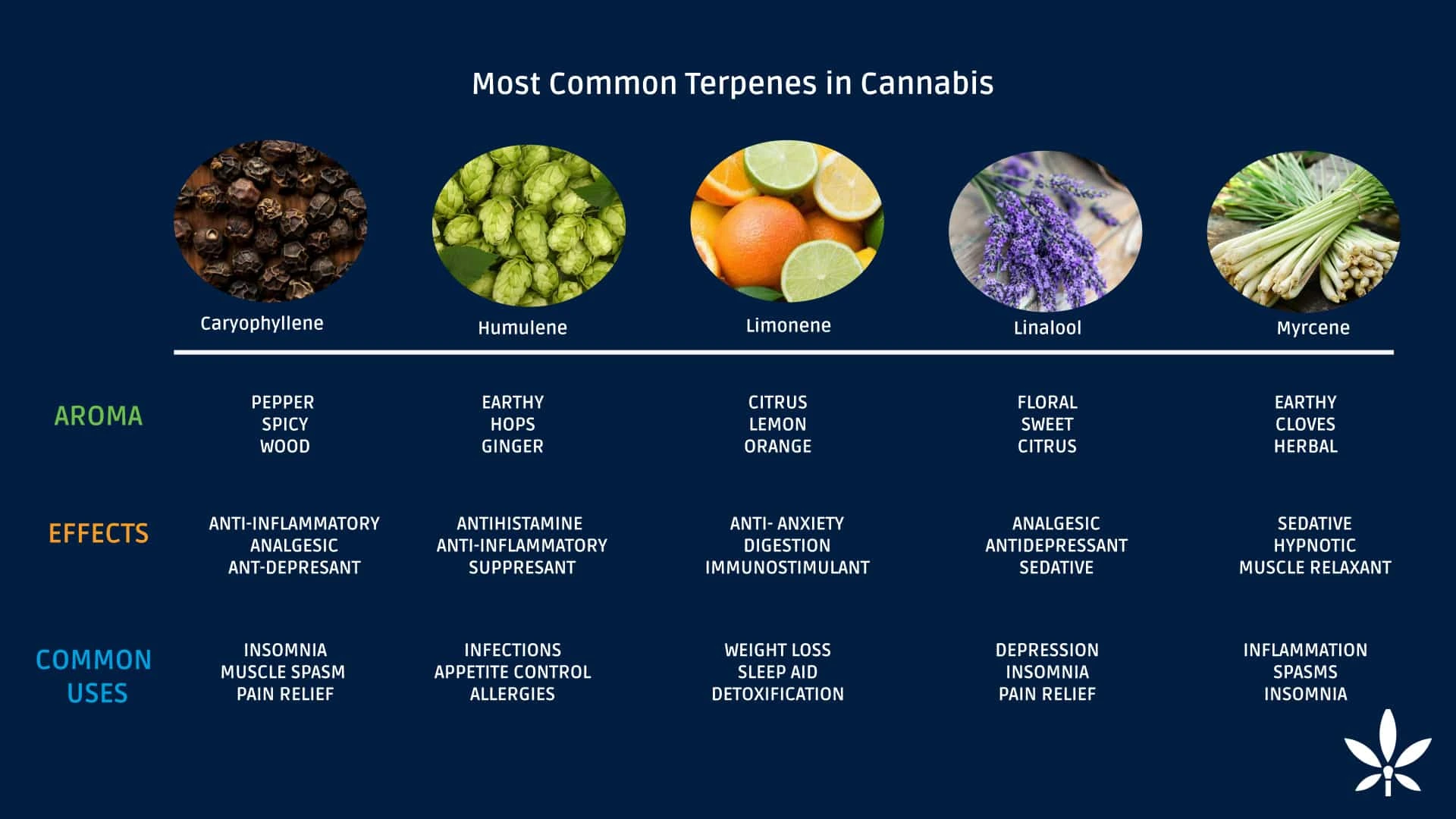
Cannabis has dozens of terpenes, but a smaller core group keeps appearing across most strains. These eight are worth knowing first because once you do, reading lab reports and product labels starts making a lot more sense.
Pinene
That clean, sharp smell you get walking through a pine forest? Pinene is behind that. One of the most widespread terpenes on the planet, and it also shows up in rosemary and basil. Two versions exist in cannabis, alpha and beta, and alpha is the one you will see far more often.
Research links pinene to better alertness and short-term memory retention. Strains with a strong pinene presence tend to feel sharp and clear rather than heavy, which genuinely surprises a lot of people, but the terpene profile explains it.
Limonene
Limonene sits behind the bright citrus scent in lemons and oranges. You also find it used widely across food, cosmetics, and cleaning products, not cannabis-specific at all. Some early research connects it to lower stress and anxiety. In cannabis, strains where limonene leads often feel uplifting and energising, which is exactly why they are a popular daytime choice.
Myrcene
Myrcene holds the top spot as the most commonly produced terpene in commercial cannabis. Earthy, musky, with a faint clove note sitting underneath. Higher concentrations connect reliably to relaxing and sedating effects, which is a big reason why so many indica-leaning strains carry it as the dominant terpene. Some research also points to myrcene potentially helping other compounds cross biological barriers in the body more easily. That could be part of why myrcene-heavy strains feel the way they do.
Linalool
Most people already know linalool from lavender without ever having a name for it. It shows up in over 200 plant species and brings a calm, floral quality to cannabis strains where it features. Pre-clinical studies have looked at linalool’s potential anti-anxiety properties, though solid human trial data is still catching up with those early findings. If calming evening strains are your regular go-to, there is a decent chance you have been choosing linalool-heavy products for a while now without realising it.
Caryophyllene
Caryophyllene occupies its own lane. It is the only cannabis terpene known to directly bind with CB2 receptors in the endocannabinoid system, giving it a functional role that other terpenes simply do not have. Warm and spicy in scent, similar to black pepper and cloves, and you find it in basil and rosemary too. In cannabis it works well when physical soothing is the goal without heavy mental sedation coming along for the ride.
Terpinolene
Terpinolene is genuinely hard to pin down in a single description. It layers floral, herbal, and faint citrus notes into something that keeps shifting a bit depending on the strain. Shows up in lilac, nutmeg, and apples, and in cannabis it tends to feature in more sativa-leaning profiles. Early studies point toward uplifting and mildly energising properties. Strains carrying it often have some of the more interesting aromas you will come across in a dispensary lineup.
Humulene
Humulene has a woody, earthy scent with a spicy edge you feel right at the back of your nose. Chemically close to caryophyllene, with some shared qualities between the two. Found naturally in hops, ginger, and sage. Pre-clinical research has explored humulene’s potential anti-inflammatory properties, though human clinical data is still catching up. In cannabis it tends to appear in strains with a more grounded, settled feel to them.
Ocimene
Ocimene has a sweet, herbal scent that tips toward tropical at higher concentrations. Found in mint, basil, parsley, and orchids. Research into its specific effects is still in earlier stages than the others on this list. It rarely takes the lead in a strain profile on its own, but when it shows up alongside other terpenes, you notice something distinct about the overall character that would not be there otherwise.
Quick Overview of Popular Terpenes
| Terpene | Aroma Type | Common Effect |
|---|---|---|
|
Pinene
|
Pine, fresh, herbal
|
Alert, clear-headed
|
|
Limonene
|
Citrus, lemon, orange
|
Uplifting, mood-boosting
|
|
Myrcene |
Earthy, musky, clove
|
Relaxing, sedating
|
|
Linalool |
Floral, lavender, sweet |
Calming, stress-reducing
|
|
Caryophyllene |
Spicy, peppery, warm
|
Soothing, grounding
|
Additional Terpenes You Should Know
Past the main eight, a few others turn up in lab reports more than people tend to expect. Smaller amounts, yes, but each one still adds something real to a strain’s overall character.
Geraniol is soft and floral, think roses with a faint citrus layer underneath. Found in geraniums and lemongrass, and research has been paying closer attention to its antioxidant and neuroprotective potential lately.
Nerolidol is woody, floral, and faintly fruity. Found in ginger, jasmine, and tea tree oil. Early studies suggest it may support relaxation when it pairs with complementary terpenes in a strain.
Bisabolol comes from chamomile and lands as gentle, sweet, and lightly nutty. The research around its anti-inflammatory and skin-soothing properties explains why it turns up in cosmetics nearly as often as it does in cannabis.
Eucalyptol, sharp, clean, eucalyptus all the way. Shows up at lower concentrations in cannabis but is hard to miss when it is there. Early research has explored potential effects on cognition and respiratory function.
Camphene has a cool, damp aroma close to fir needles and earth after rain. Not common in cannabis, but some strains carry it. Some studies have looked at antioxidant potential when combined with other plant compounds.
Terpineol is smooth and lilac-like with a slightly creamy quality. Research connects it to calming and sedative effects, and it commonly shows up alongside pinene in strains where both develop together.

Therapeutic Benefits of Cannabis Terpenes
Before we go any further, let’s be perfectly clear: cannabis products are not certified medical treatments, and terpenes are not medicine. This isn’t just a required legal disclaimer. It is the reality. However, research into the potential wellness benefits of terpenes is gaining significant momentum. If you want to be an informed consumer, understanding what the science currently shows is essential. Here is where the research stands today.
- Stress and Anxiety Support: Linalool, limonene, and caryophyllene have attracted solid scientific attention here. Linalool shows activity at GABA receptors that help regulate nervous system activity. Limonene has shown anxiolytic properties in some early trials. Both findings are still early-stage, treat them as a pointer in a direction, not something you should act on without professional input.
- Sleep and Relaxation Benefits: Myrcene and linalool are currently at the forefront of this research.Myrcene connects to sedating effects at higher concentrations, and plenty of consumers find myrcene-dominant strains suit evening use better than anything else they have tried. Individual responses vary quite a bit though, and what registers strongly for one person may barely move the needle for another.
- Pain and Inflammation Support: Caryophyllene, humulene, and bisabolol have all been studied in this area. Caryophyllene’s activity at CB2 receptors makes it one of the more interesting terpenes researchers are currently focused on. Humulene has shown anti-inflammatory activity in pre-clinical models as well. Always speak to a healthcare professional before making any personal decisions around pain management.
- Focus and Energy Balance: Pinene, limonene, and terpinolene keep showing up in strains people describe as productive and clear-headed. Pinene connects to acetylcholinesterase inhibition, a mechanism tied directly to memory and alertness. For consumers who need to stay switched on through the day, these profiles tend to support that goal well.
How to Identify Terpenes in Cannabis Products?
Once you know what to look for, identifying terpenes in a product is not complicated at all. Most people find it starts clicking fairly quickly. Three practical methods cover most situations you will run into when shopping.
- Reading lab reports and labels: A reputable retailer should hand you a certificate of analysis without any hesitation. These show the full terpene breakdown alongside cannabinoid percentages from accredited third-party labs. Any terpene sitting at 1% or above is considered dominant in that product and worth factoring into your decision. A retailer who cannot produce this documentation has already told you something important about how well they know their own stock.
- Smell and flavor clues: Strong citrus points to limonene. A sharp piney edge signals pinene. Earthy and musky almost always means myrcene is carrying most of the weight in that profile. Most people start recognising these patterns after a few intentional tries, and eventually it just becomes second nature.
- Choosing strains based on terpene profile: For more information on purchasing safe, legal cannabis in New York, visit the New York State Office of Cannabis Management.
How Terpenes Affect the Mind and Body?
Terpenes work across two areas, physical and mental. Getting a sense of both sets much more realistic expectations when you try something new.
Physical effects on the body
- Myrcene is a major contributor to that heavy, body-forward sensation and muscle relaxation people describe after using certain strains.
- Caryophyllene works on CB2 receptors distributed through the peripheral nervous system rather than acting on the brain directly.
- That peripheral activity accounts for a lot of why two strains at similar THC levels can feel so physically different when you are actually using them.
Mental and mood-related effects
- Limonene and pinene tend to push toward more alert and uplifted mental states.
- Linalool and terpineol pull toward something calmer and more introspective instead.
- Aromatherapy research backs up the idea that inhaled aromatic compounds produce measurable mood shifts, which gives terpene-driven effects a legitimate scientific basis rather than just sitting on consumer anecdotes.
Why Reactions Vary from Person to Person
Two people can share the exact same product and come away with completely different accounts of it. A few things explain why that keeps happening.
- Individual receptor sensitivity varies person to person and shapes how strongly the compounds register in the first place.
- Body chemistry and existing health conditions change how those compounds get processed once they are in the body.
- Current stress levels at the time of use shift the experience more than most people tend to realise going in.
- Tolerance builds gradually over time and moves the goalposts in ways the person often does not notice until something stops working the same way it used to.
The entourage effect means the full chemical profile drives the outcome, not any single compound working alone. So when your experience on a product differs from someone else’s, that is not the product being inconsistent. It is just two different bodies responding differently to the same inputs, and that is completely expected.
Tips for Using Terpenes Safely and Effectively
A few steady habits make a genuine difference when you are working with terpene-rich cannabis products.
- Start with less than you think you need. Give yourself real time to read how a product feels before going further. Myrcene-heavy products in particular can land far more sedately than expected even at modest amounts.
- Pay attention to vaping temperature. Keep it below 200°C. High heat burns the terpene content off before you get any real benefit from it, and this is one of the more common mistakes people make without knowing it.
- Store your cannabis properly. Airtight, opaque containers somewhere cool and dark. The New York State Office of Cannabis Management recommends storing cannabis in airtight, original packaging in a cool, dark place — locked and out of reach of children and pets.
- Only buy from sources that provide third-party lab results. No documentation means no reliable way to verify what you are getting.
- Bring in a healthcare professional when wellness is part of the picture. If cannabis and your personal health overlap, that conversation should not happen in isolation.
The Future of Terpenes in Cannabis and Wellness
Research in this space is genuinely accelerating. Isolated terpene therapies and specific formulations are being studied with a level of precision that simply did not exist five years ago. The growing shift toward full-spectrum products reflects something real changing in how both consumers and the industry understand what a complete plant profile contributes to the experience.
Outside cannabis, this work feeds into aromatherapy, food science, cosmetics, and pharmaceutical development. Some biotech companies are already building terpene-based delivery systems designed to improve how other compounds absorb in the body. Terpene data on product packaging is fast becoming the norm rather than a bonus. Knowing what are cannabis terpenes and how they function puts you ahead of that shift as it keeps developing.
Final Thoughts
Terpenes shape how cannabis smells, tastes, and feels. Paying attention to the terpene profile cuts most of the guesswork out of buying. Lab reports, product labels, and budtenders who genuinely know their stock are all worth using on a regular basis.
Use cannabis responsibly, stay within your local laws, and bring a healthcare professional into the conversation whenever health is part of the equation.
Frequently Asked Questions
Do terpenes make cannabis stronger?
Terpenes do not raise the THC concentration in a product. Through the entourage effect though, certain terpenes can shift how effective or complete a product feels in practice. A well-rounded terpene profile often makes something feel more satisfying than a high-THC product that lacks terpene variety behind it.
Are terpenes safe to consume daily?
Terpenes carry a generally recognised as safe status from food regulatory bodies at typical food consumption levels. Whether daily cannabis use suits you personally depends on your health situation and local laws. A healthcare professional can give you guidance that actually fits your circumstances rather than a generalised answer.
Can terpenes be used without cannabis?
Yes, and most people encounter them daily without realising it. Isolated terpenes are sold as flavoring agents, aromatherapy products, and wellness supplements. Plenty of those products have no connection to cannabis whatsoever.
How do I choose the right terpene profile?
Start with the experience you are actually looking for. For relaxation, myrcene or linalool-dominant products are a solid place to start. For something more uplifting and functional, limonene or pinene is where to look. Pairing lab data with a straight conversation with your budtender is still the most reliable approach.
Do terpenes lose strength over time?
Yes. Heat, light, and oxygen break terpenes down over time. Cannabis kept in a sealed, opaque container somewhere cool holds its terpene profile significantly longer than product left in warm or bright conditions. Freshness has a real and noticeable impact on what you actually consume.