
Introduction
Cannabis gets talked about like a two-ingredient recipe. THC on one side, CBD on the other, and apparently that covers it. But anyone who’s spent real time looking into the plant knows that’s barely scratching the surface. The plant actually contains over 100 identified cannabinoids, most of which never get mentioned. Plenty of them have been affecting people’s bodies for years without getting so much as a footnote.
CBG, CBN, and CBC sat quietly in the background while THC and CBD soaked up all the attention. That’s starting to shift now. Products are catching up, researchers are paying closer attention, and people at the dispensary counter are asking questions that go well beyond “will this get me high.” This guide answers those questions without the fluff.
Key Takeaways
- Cannabis has a lot more going on than THC and CBD. The plant produces major and minor cannabinoids alike, including CBG, CBN, and CBC.
- Every one of them interacts with a system your body already runs on, the endocannabinoid system.
- The way you consume shapes the whole experience, how fast it hits, how strong it feels, how long it stays.
- Minor cannabinoids are still catching up on research, but scientists are genuinely paying attention now.
- Cannabis laws vary quite a bit depending on where you live. Always verify what applies to you, and talk to a healthcare professional if health questions are part of this.
What Are Cannabinoids?
Cannabinoids are natural compounds the cannabis plant produces. They drive every effect cannabis has on the body. Once consumed, they latch onto receptors in your system and different things follow. Some lift your mood, some take the edge off stress, some do a bit of both, and a handful are honestly still being worked out by researchers.
Two Main Types of Cannabinoids
It comes down to one thing. How much of each compound does the plant actually produce?
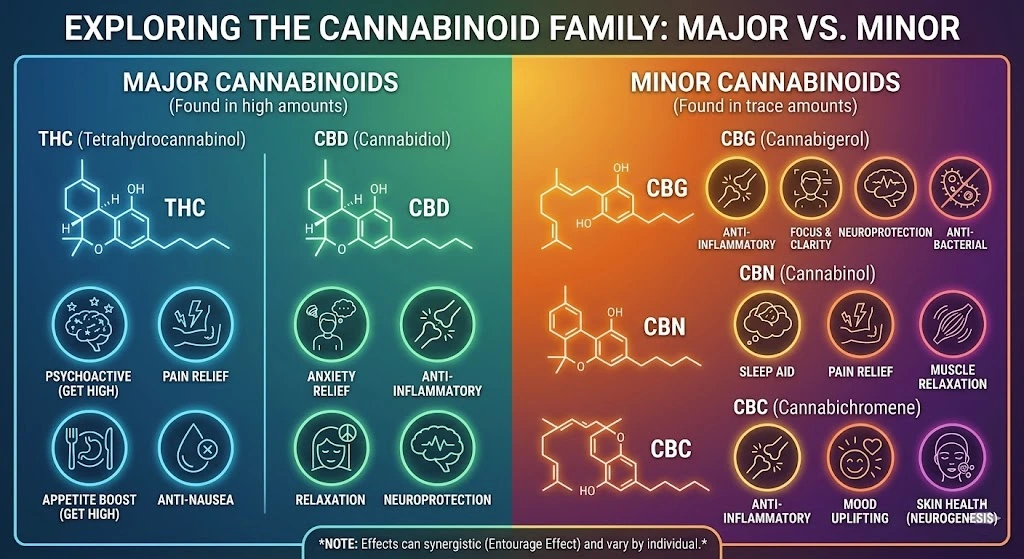
Major Cannabinoids
The ones present in the biggest amounts. THC and CBD sit at the top of that list and carry far more research than anything else. Every licensed dispensary shelf you’ve ever looked at was basically built around these two.
Minor Cannabinoids
Far smaller quantities in the plant, and the science has moved more slowly because of it. Getting clean isolates out of low-concentration compounds is genuinely hard work and costs real money. Several studies show these compounds tend to perform better when they’re running alongside major cannabinoids rather than on their own. That idea goes by the name of the entourage effect.
Major Cannabinoids Explained
THC and CBD get so much attention partly because they’ve earned it. Decades of research sit behind them, along with wide product availability and fairly predictable effects across most users. That said, they work through completely different pathways in the body, and that gap between them is actually what makes the rest of this easier to understand.
THC (Tetrahydrocannabinol)
The reason cannabis carries a reputation for getting people high really does start and end with THC. It plugs into CB1 receptors in the brain, throws a spanner into normal signal processing, and what follows is euphoria, physical looseness, and a pretty noticeable shift in how you’re perceiving things around you. Pharmacological research has mapped that process out across decades of study.
Concentrations vary across products and regulated markets require those numbers on the label. If you’re new to cannabis, picking something from the lower end of the THC range isn’t about being timid. The experience is just a lot more readable when you’re not already too far in to course-correct.
CBD (Cannabidiol)
CBD takes a completely different road. No high, no shift in perception, nothing that dramatic. It runs through indirect pathways in the endocannabinoid system and most people land in a quieter place with it, something closer to the background hum of stress getting dialled back rather than anything you’d call intense.
The World Health Organisation looked at CBD closely and found nothing pointing toward abuse potential or dependence. That’s genuinely good to know. What’s equally worth keeping in mind is that a product label isn’t a qualified opinion. If you’re thinking about CBD for something health-related, get actual medical advice before acting on what a bottle says.
Comparison of Major Cannabinoids
| Cannabinoid | Psychoactive | Common Use | Effect |
|---|---|---|---|
|
THC |
Yes |
Recreational and medical use in legal markets
|
Euphoria, relaxation, altered perception |
|
CBD
|
No |
Wellness routines, stress support
|
Calm, balance, mild relaxation
|
Minor Cannabinoids Overview
Minor cannabinoids rarely get the coverage they deserve, which is a bit odd when you realise how many full-spectrum products already have them in there. The body responds to each one differently, and some of what the research is turning up is pretty interesting once you get past the surface.
What Are Minor Cannabinoids
The low concentrations are mostly what’s held the research back. Pulling a usable isolate from a compound that barely shows up in the plant is genuinely difficult work. Full-spectrum products are your best shot at actually encountering minor cannabinoids in something you’d buy, since those preserve more of the plant’s original chemistry rather than stripping it down and rebuilding it around a single compound.
Common Minor Cannabinoids
Three minor cannabinoids show up more than any others in products and conversations. Here’s what each one is actually about.
CBG (Cannabigerol)
CBG carries the “parent” label for a straightforward reason. Both THC and CBD trace their biosynthetic origins back to CBGA, CBG’s acidic precursor, earlier in the plant’s growth cycle. By the time the plant is fully mature, most of that CBG has already converted into other compounds. You’ll find more of it in younger plants or in strains that breeders have specifically designed to hold onto it longer. Early research shows it interacts with both CB1 and CB2 receptors, which puts it in a different category from minor cannabinoids that only hit one.
CBN (Cannabinol)
CBN is what THC turns into when it gets old. Leave it exposed to heat and light long enough and oxidation does its thing, leaving CBN behind. It sits in mildly psychoactive territory but nowhere close to THC’s level. People who use it tend to reach for words like “quiet” and “winding down” rather than anything that sounds stimulating. A 2021 review found the early data worth pursuing but didn’t oversell it. More controlled studies still need to happen before anyone draws hard conclusions.
CBC (Cannabichromene)
CBC does its own thing entirely. Strong CB1 or CB2 binding isn’t part of its profile, so it works through other receptor pathways instead. It’s completely non-psychoactive and early research suggests it earns its keep when it’s working alongside other cannabinoids rather than flying solo.
Quick Comparison of Minor Cannabinoids
| Cannabinoid | Key Benefit | Typical Effect |
|---|---|---|
|
CBG |
Interacts with both CB1 and CB2 receptors
|
Balanced, focused feeling
|
|
CBN
|
Linked to rest and relaxation
|
Mild, calming sensation
|
|
CBC
|
Works alongside other cannabinoids
|
Subtle, non-intoxicating
|
How Cannabinoids Work in the Body
Cannabis affecting your body isn’t random. There’s a real biological reason for it. The plant’s compounds tap into a system your body was already running long before you ever came across cannabis.
The Endocannabinoid System (ECS)
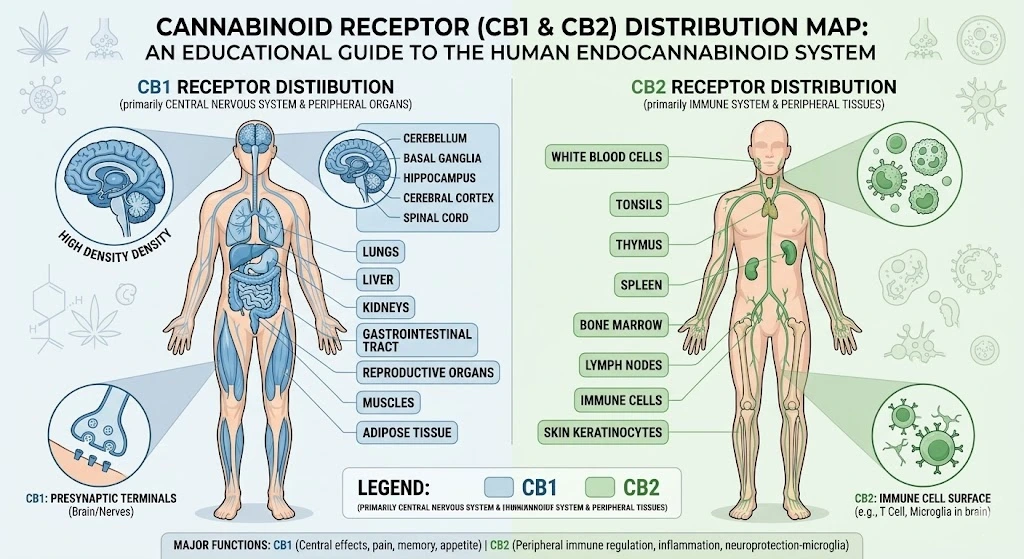
Your body has its own endocannabinoid system and it was doing its job well before cannabis entered the picture. Mood, sleep, appetite, how you handle stress, all of that runs partly through this system. It operates on receptors, endocannabinoids your body produces naturally, and enzymes that tidy everything up when they’ve done their job. When plant-based cannabinoids come into the picture, they use that same network. That’s the whole reason any of this has an effect on your body at all.
The system runs on two main receptor types and they sit in very different parts of the body.
CB1 Receptors and Their Role
CB1 receptors are mostly concentrated in the brain and central nervous system. THC heads straight for them. Once binding happens, the brain’s normal signal processing gets disrupted, and that familiar shift in mood, sensory experience, and pain response follows. Memory formation also runs through this receptor type, which matters when you look at what long-term heavy THC use research has been finding.
CB2 Receptors and Their Role
CB2 receptors are concentrated in the immune system and peripheral tissues. Inflammation regulation is their main job rather than mood or perception. CBD and a good number of minor cannabinoids pull toward CB2 far more strongly than CB1, and that preference goes a long way toward explaining why they don’t produce the psychoactive effects that THC does.
How Cannabinoids Bind to Receptors
No two cannabinoids connect to receptors in exactly the same way. That variation isn’t a minor technical detail. It’s genuinely what accounts for most of the differences you feel across compounds.
Direct Binding vs Indirect Effects
THC goes straight into CB1 receptors and does what it does. CBD skips that route entirely. Rather than locking in directly, it nudges how receptors function and how they respond to signals coming from other parts of the system. A 2019 review in the British Journal of Pharmacology goes into the specifics of those indirect mechanisms if you want more detail.
Balance and Regulation in the Body
Keeping things stable is what the ECS was built for. Scientists call that homeostasis. Cannabinoids feed into that process rather than bulldozing through it. That’s a solid part of why the same product can feel quite different from one person to the next. Your genetics, your current tolerance, your dose, and the method you used all have a hand in what actually ends up happening.
How to Use Cannabinoids
Most people pick a method based on habit or what’s convenient. That’s fine. Knowing what each method does in the body, though, puts you in a much better position to get the experience you’re actually after.
Different Ways to Consume
Four main routes exist and each one moves cannabinoids through your system differently. Here’s how they actually work.
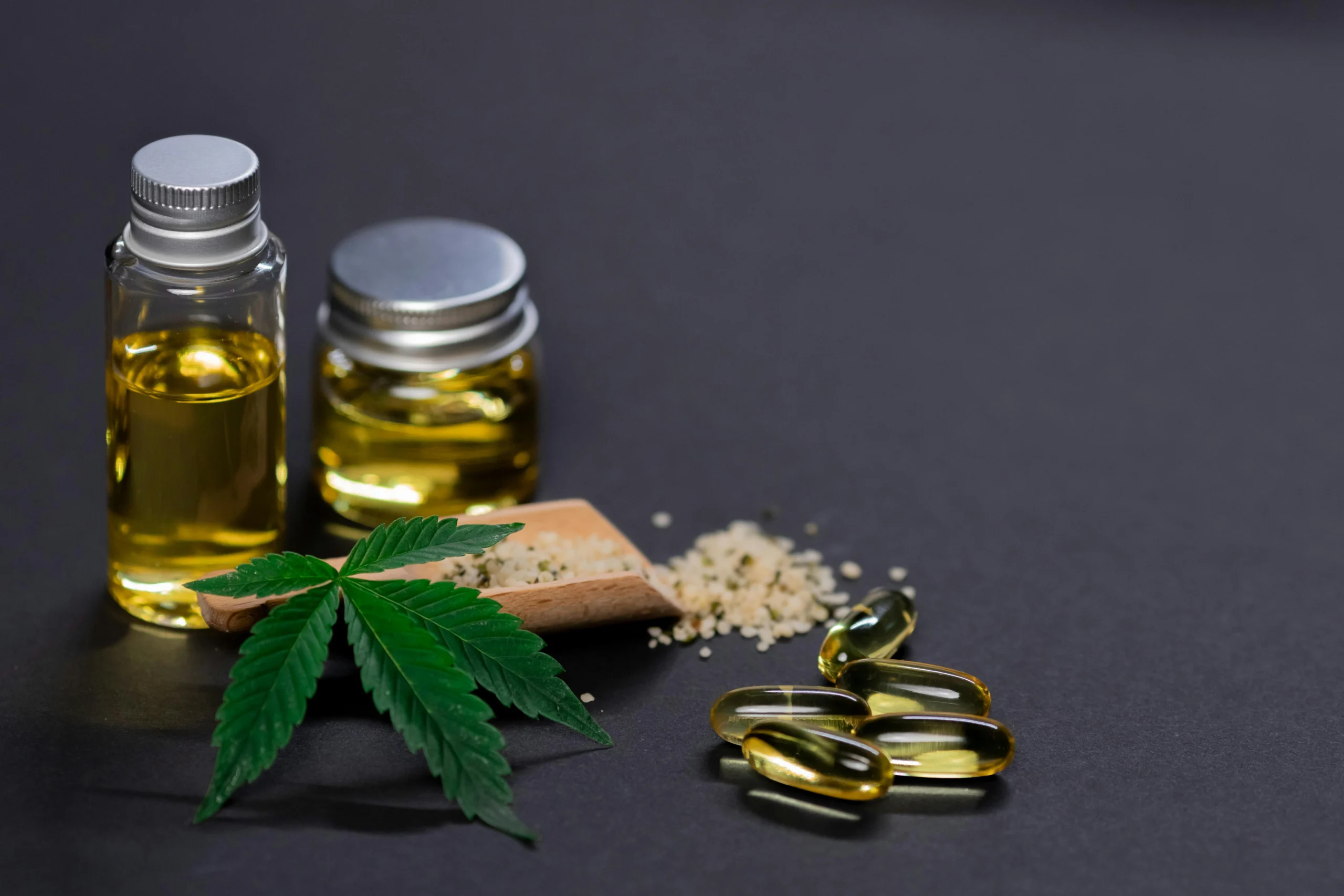
Oils and Tinctures
You hold them under your tongue before swallowing. The cannabinoids absorb through the tissue there and go directly into the bloodstream without any digestive detour. Most people start feeling something within 15 to 45 minutes. It’s easier to keep track of your dose here compared to edibles, which is a big reason it tends to suit people who are still finding what works for them.
Edibles
Everything slows down with edibles because the digestive system has to process them first. Effects can take 30 minutes to 2 hours to show up and tend to outlast other methods by a fair margin. The trap most people fall into is not waiting long enough before going back for more. Regulated products label cannabinoid content clearly, so use that information and actually take it seriously.
Vaping and Smoking
Fastest route there is. Lungs absorb cannabinoids quickly and the bloodstream gets them within minutes. Pre-rolls are a no-fuss, pre-portioned option for anyone who prefers smoking over other methods.
Topicals
Cannabinoid creams and balms stay where you put them. Once applied to the skin, they don’t reach the bloodstream in any meaningful amount, so there’s no psychoactive effect in play. People reach for them when they want something localised rather than a full-body experience.
Choosing the Right Method
Speed and duration are really the two things driving this decision. Everything else follows from those.
Fast vs Slow Effects
Inhalation and sublingual delivery are the quickest options by a fair margin. Edibles are slower and tend to last considerably longer. That delayed onset is easy to get wrong, which is why a conservative starting dose and genuine patience matter more with edibles than with any other method.
Duration of Results
Smoking or vaping generally runs 1 to 3 hours. Edibles can stretch to 4 to 8, sometimes further. Sublingual tends to sit between 2 and 4 hours for most people. Where you personally land within any of those ranges comes down to your dose, your tolerance, and how your body processes things.
What to Expect When Using Cannabinoids
Two people can take the same product in the same amount and walk away with genuinely different experiences. Patterns across users are consistent enough, though, to give you a useful picture of what tends to happen.
Short-Term Effects
Here’s what users report as the most common short term effects cannabinoids tend to produce.
- THC produces euphoria, heightened senses, and a shifted sense of time.
- CBD brings a quieter sense of calm or balance with no psychoactive effect.
- CBN is most often linked to a relaxed, settling-down kind of experience.
- Higher THC doses can bring on dry mouth, red eyes, raised heart rate, or potential mild anxiety in some people.
Going low on dose and waiting before you take more is the one habit that actually pays off across every method and every cannabinoid.
Long-Term Considerations
The long-term picture on cannabis use is still filling in. Research is ongoing, but here’s where current evidence lands.
- Heavy, frequent THC use has been linked to changes in memory and cognitive function over time, with younger users carrying more of that risk, as noted in a JAMA Psychiatry review.
- Minor cannabinoids simply don't have comparable long-term data yet. The research hasn't caught up.
- How regular use affects you shifts depending on how often you're consuming, what doses you're taking, and your own biology.
- If cannabis is something you're using consistently, a conversation with a healthcare professional is worth having, particularly if any pre-existing health conditions are part of your picture.
Major vs Minor Cannabinoids
Both types shape the cannabis experience, just in different ways and to different degrees.
Key Differences
| Factor | Major Cannabinoids | Minor Cannabinoids |
|---|---|---|
|
Availability |
High concentrations; found in most products
|
Trace amounts; more common in full-spectrum products
|
|
Research
|
Extensively studied
|
Early-stage with growing scientific interest
|
|
Effects
|
Well-documented and predictable
|
Subtle and often work best alongside major cannabinoids
|
Safety and Usage Tips
A few sensible habits cover most of it, whether you’re picking up a cannabis product for the first time or you’ve been at it for years.
- Buy from a licensed retailer every time. Labels you can actually trust are not a small thing.
- Start with a low dose and sit with it before going back for more.
- Edibles need patience. That's not optional, it's just how they work.
- Mixing cannabis with alcohol or other substances carries real risk. Know what you're combining before you do it.
- Keep products stored somewhere safe, away from kids and pets.
- If you're pregnant, nursing, or dealing with a health condition, talk to a doctor before using cannabis.
- In New York State, adult-use cannabis is legal for consumers 21 and over. For the latest rules and regulations, visit cannabis.ny.gov.
Final Thoughts
The two-compound version of cannabis is outdated. THC and CBD matter, but CBG, CBN, and CBC are no longer footnotes. The research is building and the products are catching up. Getting across both the major and minor cannabinoids gives you a much more honest picture of what the plant actually does.
Consume responsibly, stay informed, and when in doubt, ask someone qualified rather than guessing.
Frequently Asked Questions
Are Cannabinoids Legal Everywhere?
Not even close. In the United States it comes down to individual state law. Many countries still have full prohibition in place. Check what’s actually legal where you live before buying or consuming anything.
Can Cannabinoids Make You Feel High?
THC is the one doing that. CBD doesn’t produce a psychoactive effect. Most minor cannabinoids don’t either, though CBN sits in mild psychoactive territory. Even then it’s a far cry from what THC produces.
How Long Do Cannabinoid Effects Last?
Smoking or vaping tends to run 1 to 3 hours. Edibles stretch out to 4 to 8 hours, sometimes longer. Sublingual delivery lands somewhere in the 2 to 4 hour range for most people. Your actual dose and tolerance shift all of those numbers.
Can I Mix Different Cannabinoids Together?
Most full-spectrum products are already doing this. The science behind combining cannabinoids and terpenes is the whole basis of entourage effect research. If you’re experimenting with your own combinations, go slowly and actually pay attention to your body’s response.
Are Minor Cannabinoids Better Than Major Ones?
Different, not better. Minor cannabinoids tend to be quieter in their effects and generally perform better alongside major cannabinoids than flying solo. Whether they suit you depends entirely on what you’re actually after.
Do Cannabinoids Have Side Effects?
Yes, mainly with THC at higher doses. Dry mouth, red eyes, elevated heart rate, and occasional mild anxiety are the common ones. CBD tends to sit well with most people, though some notice mild drowsiness or digestive discomfort, as noted in WHO findings. Minor cannabinoids have a thinner side effect profile in the research, partly because the data is still limited.
How Do I Choose the Right Cannabinoid Product?
Figure out the kind of experience you want first. Then think about how you want to consume it, how experienced you are, and where your tolerance sits. Read labels carefully. Dispensary staff are often genuinely useful here, and a healthcare professional is the right call if you need advice specific to your situation.